
Barton Station
Emissions Reduction at Barton Station
Barton Station is an 8,200 hectare sheep and cattle operation located in the Western Districts of Victoria. Barton is predominately a breeding operation with the capacity to finish a portion of its own stock. Situated in a temperate climate zone with winter dominant rainfall and a dry summer following a highly productive spring.
Barton is connected to grid electricity for general electricity requirements and relies on diesel inputs to power on-farm machinery and vehicles. Barton is a sprawling aggregation of five properties, with a variety of land types including redgum woodlands, swamps and arable areas, with a mix of improved and native country.
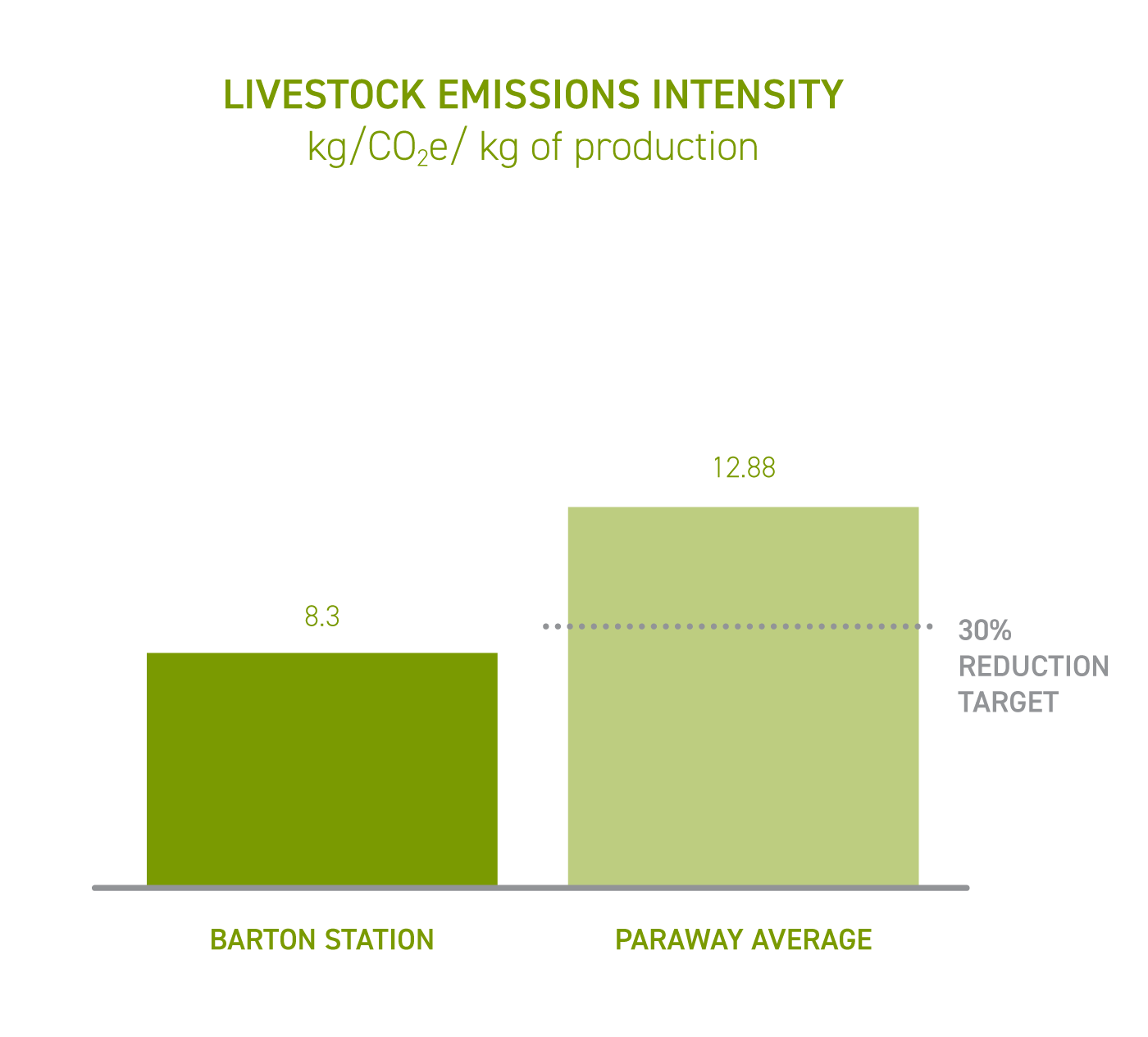
The following initiatives are being pursued by Paraway at Barton Station:
Herd & Flock Management
Pasture Management: Improving pasture to provide a more nutritious diet and managing stocking rates to match pasture availability.
Herd Management: Adopting breeding practices to match to feed requirements.
Methane Abatement Feed Supplements and Pastures: Monitoring developments in methane-reducing feed supplements for forage-crop grazing operations.
Fossil Fuel Transition
On-Site Renewable Opportunities: Replacing diesel-powered water infrastructure with solar alternatives to reduce energy input requirements.
Energy Efficiency of Operations: Reduce energy requirements through more efficient operations.
Green Electricity Power Purchase Agreement: Transitioning gridded electricity supply to renewable sourcing via a Green PPA.
Carbon Storage Opportunities
Shelterbelt Plantings: Environmental plantings to create shelterbelts effective carbon insets with additional animal welfare and biodiversity benefits.
Herd & Flock Management
Paraway focuses on improving efficiency at Barton through a tight focus on maximising pasture and breeding practices for productivity. Paraway also continues to monitor updates in methane-reducing feed supplements in applicability to forage-crop operations.
Pasture Management
Barton Station is undertaking an extensive pasture development program. This includes addressing soil fertility, subdividing paddocks, increasing available shelter, and delivering reticulated water to paddocks. These measures enable higher quality pasture and better lamb survival rates, in turn raising animal productivity.
Additionally, pasture species are carefully managed at Barton. New pastures are predominately a holdfast phalaris and clover mix. Rotationally grazing cows enables the bulk of the carryover spring feed to be cleared over summer, opening up pasture sward and allowing sub clover germination during the autumn break, maximising feed quality and availability for the herd over the year.
Containment feeding using holding paddocks is also employed at Barton Station during seasonal feed gaps when silage is available. Silage forms the base containment ration and is harvested at peak nutritional content, best utilising excess pasture grown in spring. This helps to maximise weight-gain providing high-quality feed for livestock through differing weather conditions. Additionally, containment helps prevents overgrazing in dry summer periods, allowing pasture to recover to build the lambing platform.
Herd Management
Barton maximises herd productivity through fine-tuning breeding practices. Ewes are split joined in both January and February helping to mitigate the chance of bad weather at joining or lambing periods which can affect weight gain. A short joining and early weaning period are also designed to give ewes additional time post-weaning to feed in peak spring conditions and regain condition for joining.
Additionally, foetal aging is undertaken as part of the cattle breeding program at Barton. At 12 weeks, foetuses are aged using scanning to identify early and late joined cows based on their expected month of calving. On this basis, breeders are segregated for differential nutritional requirements to be managed more easily as well as planning for more efficient feed budgeting and agistment or sale decisions in the event of a dry autumn or spring.
Methane Reducing Feed Supplements and Pastures
Recent research has identified certain pasture species (such as lucerne, subterranean clover, chicory, plantain) and variants within species that have shown potential to directly reduce livestock enteric methane production. Further research is required, but this could provide opportunities to incorporate direct methane reductions into extensive pasture-based systems like Barton. Paraway will continue to monitor progress in this area.
Fossil Fuels Transition
Paraway continues to pursue opportunities to connect on-station energy infrastructure to renewable sources. Paraway has also transitioned all NSW and VIC gridded energy supply to Green Power Purchase Agreements in complement to direct efforts to minimise energy inputs.
On-Site Renewable Opportunities
As part of a portfolio-wide initiative, Paraway is converting existing water pumps to solar infrastructure. Barton has electric bores and pumps across the property which can be converted from grid power to renewables.
Energy Efficiency of Operations
Semi-portable cattle yards and portable sheep yards have limited the amount of driving required for mustering in routine processes like calf and lamb weighing and marking. Optiweigh units are also strategically deployed to allow in-paddock weighing of sheep and cattle to reduce fuel use for mustering. An extensive laneway system has also increased fuel efficiency.
Green Electricity Power Purchase Agreement
Barton’s general electricity requirements are sourced on-grid and have now been transitioned to renewable sourcing under a Green PPA. This work remains supplementary to direct pursuit of energy efficiency and on-site renewable opportunities which remain Paraway’s first-priority method of abatement.
Carbon Storage Opportunities
Opportunities for carbon storage projects will be dependent on each station’s specific landscape and natural features. At Barton Station, Paraway has identified opportunities for high-impact environmental plantings. Due to the intensity of the Barton’s operations, a soil carbon project is too restrictive on management.
Shelterbelt Plantings
In 2023, Paraway planted over 14,000 native trees and shrubs at Barton Station. The planting project was designed to create 30m wide shelterbelts which offer protection to lambing ewes during windy and wet winter conditions. These types of environmental plantings provide effective carbon insets coupled with productivity and biodiversity benefits. This has been proven to drive improved animal welfare outcomes, including improvements in lamb survivability during peak lambing periods. Shelterbelts additionally provide biodiversity benefits, acting as habitat corridors that support the movement of native fauna throughout farms.
Plant species were carefully selected with consultant advice and were sourced locally to maximise the functionality and survivability of the trees. So far, 31 hectares has been planted at Barton with good survival rates through the first winter. From a carbon storage perspective, the modelled sequestration for the project should amount to over 6,400 tCO2e over 25 years.
Note: At present, Paraway has not claimed any ACCUs from soil or vegetation carbon sequestration and we are looking at the opportunities as a way to meet our targets.