
Burindi Station
Emissions Reduction at Burindi Station
Burindi Station is a premium Angus and Wagyu cattle breeding & growing station set upon approximately 18,000 hectares. Burindi is comprised of mixed hilly country and alluvial river flat areas. Located in NSW New-England region, the station is located in a moderate-rainfall zone and additionally benefits from frontage to the Manilla River and tributaries. Burindi’s pastures are a diverse mix of annual and perennial natives as well as improved temperate and sub-tropical introduced species, with forage crops and improved pasture used to support growing operations.
Burindi is connected to grid electricity for general electricity requirements. However, the station still relies on fuel inputs including several diesel water pumps, on-farm vehicles and machinery. The landscape at Burindi supports areas of moderate timbered country at the station; presently, Burindi already has over 2,950 hectares of forest cover (16%), and 2,144 hectares of woodland (12%) coverage across the station.
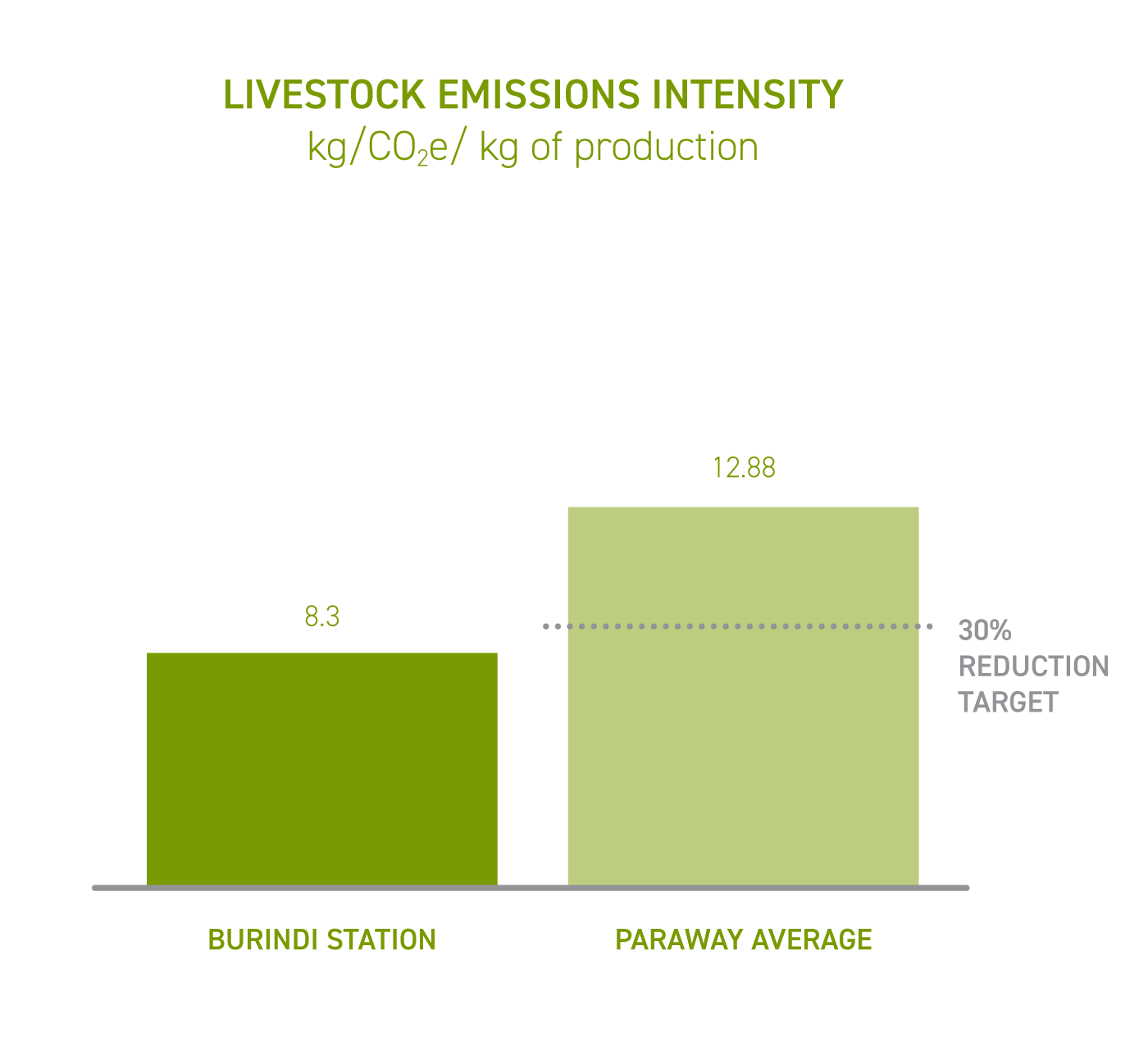
The following initiatives are being pursued by Paraway at Burindi Station:
Herd & Flock Management
Pasture Management: Optimising grazing rotations for livestock performance requirements and improving pasture to produce a high nutrition diet.
Genetic Selection: Using Estimated Breeding Value (EBV) data to select high performing bulls and replacement heifers to accelerate long-term herd productivity.
Sexed Artificial Insemination Trial: Using sexed semen technology to increase the proportion of male calves conceived and raise herd feed-conversion.
Methane Reducing Feed Supplements and Pastures: Monitoring developments in methane-reducing feed supplements for forage-crop grazing operations.
Fossil Fuel Transition
On-Site Renewable Opportunities: Replacing diesel-powered water infrastructure with solar alternatives to reduce energy input requirements.
Green Electricity Power Purchase Agreement: Transitioning gridded electricity supply to renewable sourcing via a Green PPA.
Carbon Storage Opportunities
Environmental Plantings: Revegetation of riparian areas to promote local biodiversity, improve water quality and sequester carbon.
Soil Carbon Technology Trial: Using remote-sensing technology to investigate improvement of Burindi’s soil carbon profile under Paraway’s land management.
Herd & Flock Management
Paraway focuses on improving efficiency at Burindi by closely aligning operations to the most productive use for pasture and optimising the genetic composition of the herd itself. Paraway also continues to monitor updates in methane-reducing feed supplements applicability to extensive grazing operations.
Pasture Management
Optimising pasture composition and livestock grazing rotations is important for both increasing animal performance and decreasing emissions intensity. Reflective of mixed landscapes at Burindi, cattle are selectively grazed on land matched to their feed requirements while optimising pasture utilisation. Breeders can be grazed on lower productivity and hilly country where they can still maintain a fertile and healthy condition, without unnecessary weight gain. Steers and heifers are grown on higher productivity pastures to maximise their weight gains, reducing days on farm for steers and days to joining for heifers.
Grazing at Burindi is also planned to maintain overall land condition and is supported by weed management. Both forage-crops and improved pastures are carefully selected to suit for the local climate and soil types while providing the nutritional quality to increase animal production per kilogram of dry matter intake.
Genetic Selection
Animal genetics is a key component of Paraway’s strategy to improve the long-term animal productivity and sustainability of its livestock business. At Burindi, Paraway invests to improve the genetic base of its cattle herd through selection of bulls and replacement heifers based on Estimated Breeding Values (EBVs). EBVs utilise genetic data to provide a prediction of an animal’s characteristics against productivity-linked traits within the same breed, facilitating accurate animal selection to drive performance.
At Burindi, breeding animals are selected for superior feed conversion (in addition to other characteristics) which results in reduced enteric methane output. More productive heifers should produce more calves with higher weaning rates and weight gains, reducing the emissions intensity of these animals by being able to sell the finished animals earlier.
Sexed Artificial Insemination Trial
Paraway invests in the use of artificial insemination reproductive technology to improve the outcomes of its breeding program. This provides the ability to isolate gendered semen for conception in order to selectively raise the ratio of male calves born with genetic traits for growth while concentrating heifers born with desirable traits. As male calves exhibit higher average daily growth (ADG), this should flow onto higher herd efficiency with reduction in emissions intensity estimated between 8-17% based on expected higher ADG.
In 2023, a trial sexed semen program was initiated at Burindi. The initial trial showed mixed conception success, but the gender of the calves born was in line with expectations. Further trialling at additional Paraway properties is commencing to further assess the technology.
Methane Reducing Feed Supplements and Pastures
Recent research has identified certain pasture species (such as lucerne, subterranean clover, chicory, plantain) and variants within species with demonstrated potential to directly reduce livestock enteric methane production. Further research is required, but this could provide opportunities to incorporate direct methane reductions into extensive pasture-based systems like Burindi. Paraway will continue to monitor progress in this area.
Fossil Fuels Transition
Paraway continues to pursue opportunities to connect on-station energy infrastructure to renewable sources. Paraway has also transitioned all NSW and VIC gridded energy supply to Green Power Purchase Agreements in complement to direct efforts to minimise energy inputs.
On-Site Renewable Opportunities
As part of a portfolio-wide initiative, Paraway is converting existing water pumps to solar infrastructure. Burindi has been progressively replacing existing diesel pumps with solar pumps across the property and will continue this replacement program into the future. Consumption savings associated with each pump has the potential to reduce emissions by 15tCO2e annually.
Green Electricity Power Purchase Agreement
Burindi’s general electricity requirements are sourced on-grid and have now been transitioned to renewable sourcing under a Green PPA. This work remains supplementary to direct pursuit of energy efficiency and on-site renewable opportunities which remain Paraway’s first-priority method of abatement.
Carbon Storage Opportunities
Opportunities for carbon storage projects will be dependent on each station’s specific landscape and natural features. At Burindi, Paraway has identified opportunities for high-impact environmental planting and is carrying out a soil carbon trial.
Regeneration and Environmental Plantings
At Burindi, a regeneration and planting area has been set aside of approximately 100 hectares. The site was chosen to support biodiversity and river health outcomes in addition to carbon sequestration. Mixed native species were carefully selected to re-establish vegetation communities that historically existed at the site to restore natural landscapes and support local biodiversity.
The project involves fencing off river land front to restrict access by cattle and plant approximately 1,600 tree and shrub seedlings. The modelled sequestration for the project should amount to over 10,800 tCO2e over 25 years.
Soil Carbon Technology Trial
In 2023, Burindi Station trialled a remote soil carbon tracking platform which offers a science-based and scalable remote-sensing technology to measure changes in soil carbon levels. Burindi was suited to the trial because of its moderate rainfall and pasture improvement program. Initial assessment indicated a material amount of carbon has been added to soils since 2019, however, further analysis would be required to isolate what occurred naturally due to recent annual rainfall and additionality driven by management practices.
Note: At present, Paraway has not claimed any ACCUs from soil or vegetation carbon sequestration. Such opportunities are currently considered to be used to meet internal emissions targets.